
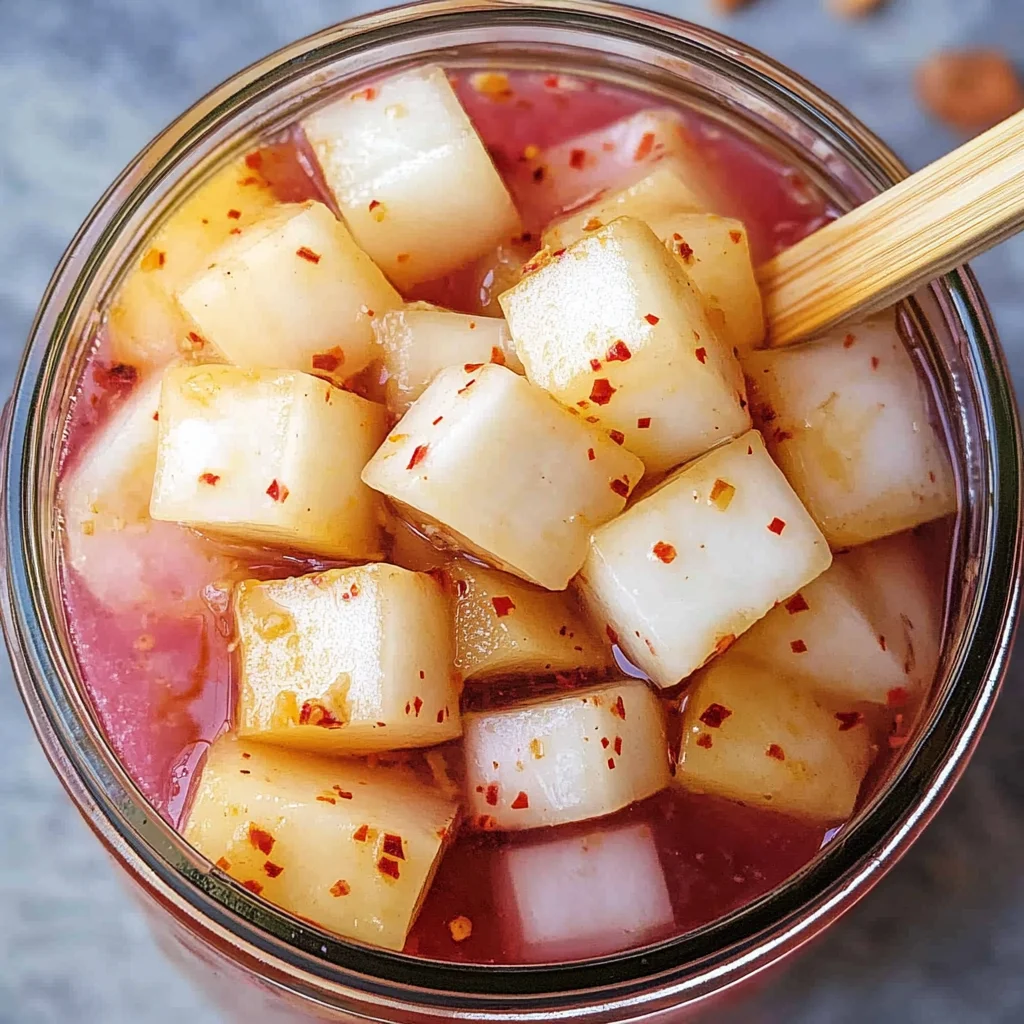
This Korean Pickled Radish (Pickled Daikon Radish) recipe is a must-try for anyone looking to add a refreshing, tangy crunch to their meals. Perfect as a side dish for tacos, sandwiches, or any Korean main dish, these pickled radishes are not only quick to prepare but also packed with flavor. Their unique taste and vibrant color will elevate your dining experience on any occasion.
Why You’ll Love This Recipe
- Quick and Easy: This recipe takes just 15 minutes of prep time, making it perfect for busy days.
- Versatile Side Dish: Enjoy them with tacos, sandwiches, or as a topping for various dishes.
- Fresh and Flavorful: The combination of vinegar, sugar, and optional spices creates a perfect balance of taste.
- Healthier Option: Low in calories and high in flavor, these pickles make a healthy addition to your meals.
- Customizable: Adjust the spice level by adding more or less gochugaru according to your preference.
Tools and Preparation
To make this delicious Korean Pickled Radish, you’ll need some essential tools for an efficient cooking experience.
Essential Tools and Equipment
- Airtight glass jar
- Small saucepan
- Knife
- Cutting board
Importance of Each Tool
- Airtight glass jar: Keeps the pickled radish fresh while allowing you to store leftovers easily.
- Small saucepan: Ideal for heating the pickling liquid quickly and efficiently.
- Knife: A sharp knife allows for precise cutting of the radish into even-sized cubes.
- Cutting board: Provides a stable surface for slicing the radish safely.

Ingredients
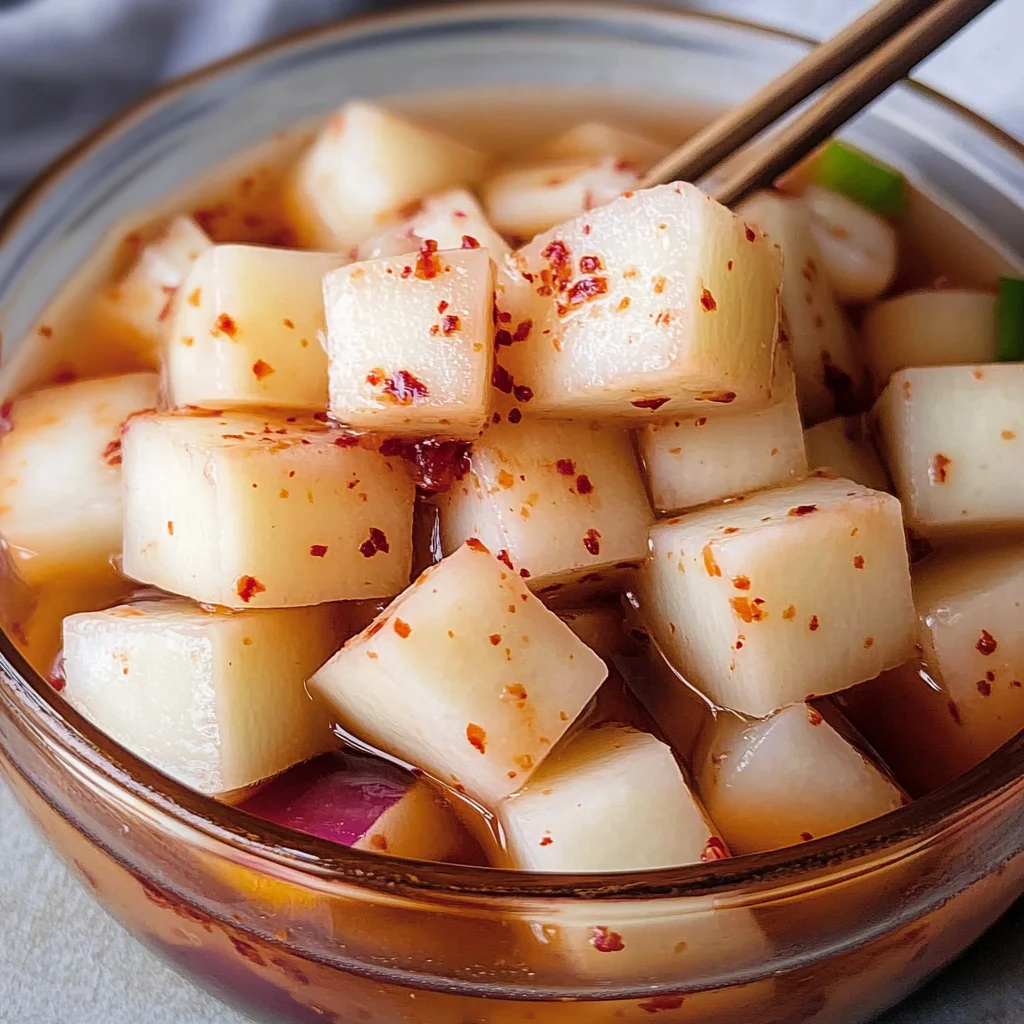
This delicious Korean style pickled radish uses Korean radish or Daikon radish for quick pickling. It’s a great side to any taco, sandwich, or Korean main!
For the Pickling Liquid
- 1 lb Korean radish (or Daikon radish)
- ½ cup distilled white vinegar
- ½ cup water
- 3 tablespoons sugar
- 1 teaspoon salt
Optional Additions
- 2 garlic cloves (optional)
- 1 teaspoon gochugaru (optional; substitute red pepper flakes)
How to Make Korean Pickled Radish (Pickled Daikon Radish)
Follow these simple steps to create your own batch of Korean Pickled Radish.
Step 1: Prepare the Radishes
- Rinse one pound of radish (either Daikon or Korean radish).
- Slice off the ends of the radishes and peel them.
- Cut them into roughly even-sized cubes.
- Add the radish cubes to an airtight glass jar.
Step 2: Make the Pickling Liquid
- In a small saucepan, combine half cup of distilled white vinegar, half cup of water, three tablespoons of sugar, and one teaspoon of salt.
- Heat this mixture until the sugar dissolves completely.
- Allow it to cool down to room temperature.
Step 3: Combine Ingredients
- If using, add two cloves of garlic and one teaspoon of gochugaru into the jar with the radish cubes.
- Pour the cooled pickling liquid over the radishes until they are fully covered.
Step 4: Refrigerate
- Close the jar tightly.
- Refrigerate overnight for best results; your pickled radishes will be ready to enjoy by the next day!
How to Serve Korean Pickled Radish (Pickled Daikon Radish)
Korean Pickled Radish, or Pickled Daikon Radish, is a versatile side dish that can elevate many meals. Its crisp texture and tangy flavor make it a delightful addition to various dishes.
Tacos
- Crispy Delight: Add pickled radish to your favorite tacos for a refreshing crunch that balances the richness of meats.
Sandwiches
- Flavor Boost: Incorporate pickled radish in sandwiches to enhance flavors with its tangy taste, making every bite more exciting.
Rice Bowls
- Colorful Addition: Serve pickled radish on top of rice bowls for a pop of color and flavor that complements meats and veggies.
Salads
- Zesty Crunch: Toss pickled radishes into salads for an added zesty crunch that pairs well with leafy greens and dressings.
Sushi Rolls
- Japanese Twist: Use pickled radish as a filling in sushi rolls for an intriguing blend of textures and flavors.
Grilled Meats
- Savory Contrast: Pair with grilled chicken, beef, or turkey to provide a refreshing contrast to smoky, savory flavors.
How to Perfect Korean Pickled Radish (Pickled Daikon Radish)
To achieve the best results when making Korean Pickled Radish, consider these helpful tips.
- Bold Ingredients: Use fresh, firm radishes for the best crunch and flavor. Avoid soft or limp radishes.
- Bold Ratios: Adjust vinegar or sugar levels according to your taste preference. A little more sugar can balance out tartness.
- Bold Storage: Store pickles in an airtight container in the refrigerator to enhance flavor over time.
- Bold Time: Allow the radishes to pickle overnight for the best taste; they become even more flavorful after a few days.
- Bold Variations: Experiment with adding other ingredients like sliced ginger or sesame seeds for unique twists.
Best Side Dishes for Korean Pickled Radish (Pickled Daikon Radish)
Korean Pickled Radish pairs wonderfully with many side dishes, enhancing your meal experience. Here are some excellent options:
- Kimchi: This traditional fermented dish offers spicy and sour flavors that complement the tanginess of pickled radish perfectly.
- Steamed Rice: A simple bowl of steamed rice provides a neutral base that balances the bold flavors of pickled radishes.
- Korean Fried Chicken: The crispy texture and savory taste of fried chicken pair beautifully with the refreshing crunch of pickled radish.
- Grilled Vegetables: Roasted or grilled vegetables add depth of flavor and work harmoniously alongside the acidity of the pickles.
- Banchan Variety: Serve assorted banchan (side dishes) like seasoned spinach or bean sprouts for a colorful and diverse spread.
- Noodles: Cold noodles tossed in sesame oil can be enhanced by the bright acidity from pickling, creating an exciting dish.
Common Mistakes to Avoid
When making Korean Pickled Radish, it’s easy to overlook some key steps. Here are common mistakes to avoid for the best results.
- Using the wrong radish: Always choose fresh Korean or Daikon radishes for an authentic flavor. Substituting with other radish types may alter the taste significantly.
- Skipping the cooling step: Allowing the pickling liquid to cool before pouring it over the radishes is vital. If hot, it can soften the radish too much and ruin the crunch.
- Not sealing the jar properly: Make sure your jar is airtight. A poorly sealed jar can lead to spoilage and affect the flavor of your pickled radish.
- Insufficient marinating time: Patience is key! Letting your pickles sit overnight in the refrigerator allows flavors to meld beautifully. Don’t rush this step.
- Ignoring optional ingredients: Garlic and gochugaru add depth to your pickles. Omitting them may lead to a less complex flavor profile.
Storage & Reheating Instructions
Refrigerator Storage
- Store in an airtight glass jar in the fridge.
- Best consumed within 1-2 weeks for optimal crunch and flavor.
- Keep away from direct sunlight and avoid temperature fluctuations.
Freezing Korean Pickled Radish (Pickled Daikon Radish)
- Freezing is not recommended, as it can change texture and taste.
- If you must freeze, use freezer-safe containers and consume within 1 month.
Reheating Korean Pickled Radish (Pickled Daikon Radish)
- Oven: Not recommended for pickled radishes; serve cold or at room temperature for best taste.
- Microwave: Heat briefly if desired but do so gently to preserve texture; aim for 10-15 seconds at a time.
- Stovetop: Not suitable for reheating as they are best enjoyed cold or at room temperature.
Frequently Asked Questions
Here are some common questions about Korean Pickled Radish to help you get started.
What is Korean Pickled Radish (Pickled Daikon Radish)?
Korean Pickled Radish, also known as danmuji, is a vibrant side dish made with sliced Daikon radishes marinated in vinegar, sugar, and salt.
How long does it take for Korean Pickled Radish to pickle?
The pickling process requires at least one night in the refrigerator, but for even better flavor, allow it to sit for up to three days.
Can I customize my Korean Pickled Radish recipe?
Absolutely! Feel free to adjust sugar levels or add spices like ginger or sesame seeds for extra flavor according to your taste preferences.
How should I serve Korean Pickled Radish?
Korean Pickled Radish pairs excellently with tacos, sandwiches, or any grilled meats. It adds a refreshing crunch that enhances many dishes!
Final Thoughts
Korean Pickled Radish is not only delicious but also versatile. This bright and tangy side dish complements a variety of meals and can easily be customized with your favorite spices or additional ingredients. Try making this recipe at home and enjoy its delightful crunch!
Korean Pickled Radish (Pickled Daikon Radish)
Korean Pickled Radish, or Pickled Daikon Radish, is a vibrant and tangy side dish that adds a refreshing crunch to any meal. Perfectly suited for tacos, sandwiches, or as a complement to grilled meats, this quick and easy recipe takes just 15 minutes of prep time. The sweet-and-sour balance of vinegar and sugar highlights the natural crispness of the radishes, creating a delightful condiment that elevates your dining experience. Customize it with garlic or gochugaru for an extra kick, making it a versatile addition to your culinary repertoire.
- Total Time: 20 minutes
- Yield: Approximately 4 servings 1x
Ingredients
- 1 lb Korean radish (or Daikon radish)
- ½ cup distilled white vinegar
- ½ cup water
- 3 tablespoons sugar
- 1 teaspoon salt
- Optional: 2 garlic cloves
- Optional: 1 teaspoon gochugaru
Instructions
- Rinse and peel the radishes, then cut them into even-sized cubes.
- In a small saucepan, combine vinegar, water, sugar, and salt; heat until sugar dissolves completely. Allow to cool.
- In an airtight jar, add the radish cubes along with garlic and gochugaru if using.
- Pour the cooled pickling liquid over the radishes until fully covered.
- Seal the jar tightly and refrigerate overnight.
- Prep Time: 15 minutes
- Cook Time: 5 minutes
- Category: Side Dish
- Method: Pickling
- Cuisine: Korean
Nutrition
- Serving Size: 1/4 cup (60g)
- Calories: 25
- Sugar: 5g
- Sodium: 350mg
- Fat: 0g
- Saturated Fat: 0g
- Unsaturated Fat: 0g
- Trans Fat: 0g
- Carbohydrates: 6g
- Fiber: 1g
- Protein: 1g
- Cholesterol: 0mg


Leave a Comment